Table of Contents
ToggleInstalling a Bose home theater system can transform how a homeowner experiences movies, music, and gaming, without the complexity of pro-grade AV setups. Bose offers systems ranging from sleek soundbars to full multi-speaker packages, all designed with plug-and-play simplicity. For DIYers willing to handle basic wiring and mounting, these systems deliver cinema-quality sound with less hassle than traditional component-based builds. This guide breaks down what Bose offers, how to choose the right system for a space, and what to know before drilling the first mounting hole.
Key Takeaways
- A Bose home theater system delivers cinema-quality sound through integrated soundbars and wireless modules without the complexity of traditional receiver-based setups, making it ideal for DIY homeowners.
- Room size and ceiling height determine the right system: the Smart Soundbar 600 works for spaces under 200 square feet, the Smart Soundbar 900 suits 200–350 square feet, and the Lifestyle 650 handles larger open-concept areas effectively.
- Proper installation requires correct wall anchors (toggle bolts rated for 25+ pounds minimum), CL2-rated speaker wire for in-wall runs, and ADAPTiQ calibration to optimize audio performance and clarity.
- Bass modules and surround speakers perform best when placed on the same wall as front speakers or in front corners, avoiding cabinets and furniture that muffle sound output.
- A complete Bose home theater system with soundbar, bass module, and surround speakers costs $2,350–$2,700, positioning it as mid-tier pricing compared to other home audio solutions while offering integrated smart home compatibility.
What Is a Bose Home Theater System?
A Bose home theater system is an integrated audio setup designed to replace the built-in speakers on TVs with dedicated components optimized for movies, shows, and streaming content. Unlike traditional receiver-based systems that require matching amps, speakers, and complex calibration, Bose systems use proprietary wireless technology and simplified signal processing to deliver balanced audio across a room.
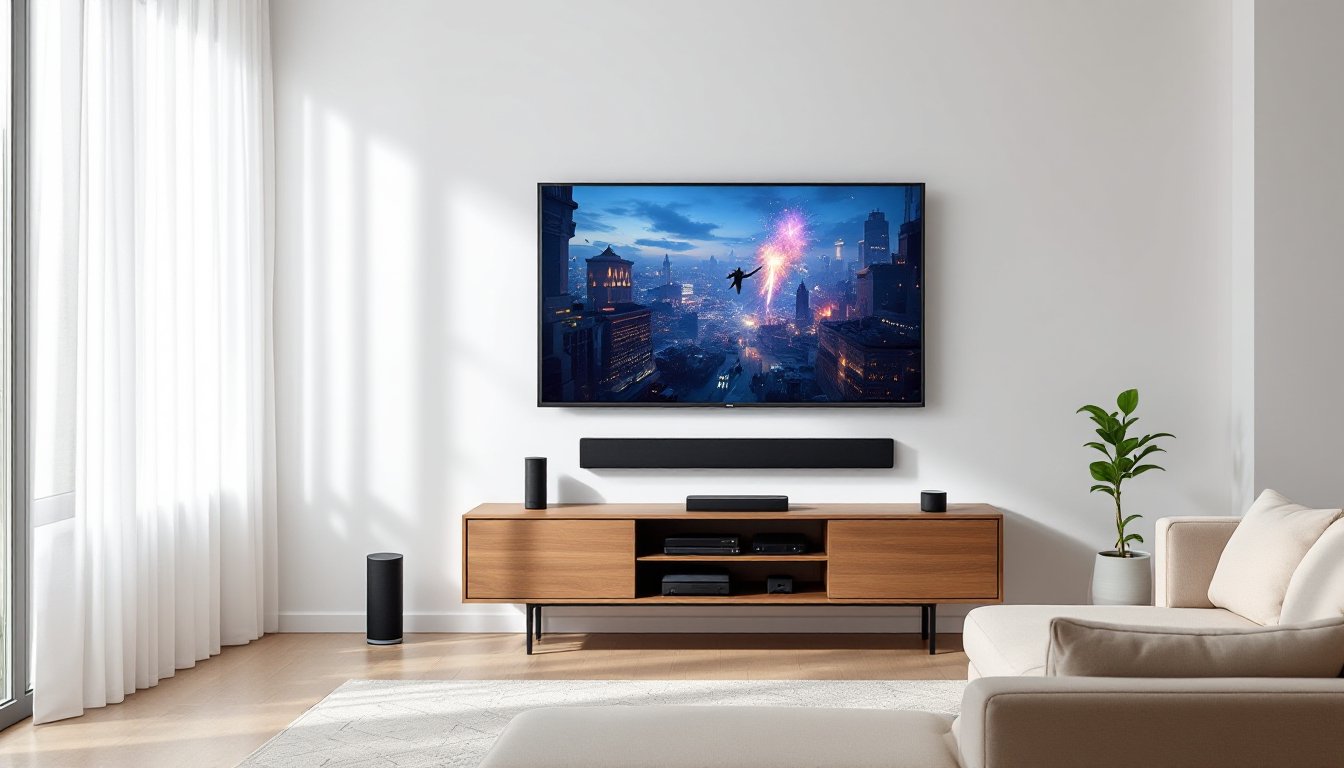
Most Bose setups include a soundbar (the main left/right/center channel speaker), an optional bass module (subwoofer for low-frequency effects), and surround speakers that connect wirelessly or via proprietary adapters. The soundbar connects to the TV via HDMI ARC (Audio Return Channel) or optical cable, pulling audio from streaming apps, cable boxes, and gaming consoles.
Bose doesn’t use the traditional 5.1 or 7.1 channel labeling you’d see on receiver-based systems. Instead, they rely on PhaseGuide and TrueSpace processing, digital signal tricks that simulate surround sound even from a compact soundbar. It’s not the same as discrete speakers placed around a room, but for spaces under 300 square feet, the difference is hard to spot without trained ears.
These systems integrate with Amazon Alexa, Google Assistant, and Apple AirPlay 2, allowing voice control and multi-room audio grouping. For homeowners adding smart home devices, this means the theater system can pair with lighting scenes, thermostats, and security cams through platforms that support smart home automation.
Top Bose Home Theater Systems for Your Home
Bose Smart Soundbar Systems
The Bose Smart Soundbar 900 is the flagship model as of 2026, featuring Dolby Atmos support and upward-firing drivers for overhead sound effects. It measures 41 inches wide, making it suitable for TVs 55 inches and larger. The soundbar includes built-in mics for voice assistants and ADAPTiQ calibration, a setup process where the user wears a headset that measures room acoustics and tunes the speaker output accordingly. Installation involves mounting the soundbar on a wall bracket (included) or placing it on a TV stand. Wall mounting requires hitting at least one stud or using appropriate drywall anchors rated for the 10-pound weight.
The Bose Smart Soundbar 600 is a mid-tier option at 27.5 inches wide, better suited for smaller TVs (43–50 inches) or bedroom setups. It lacks the upward-firing drivers of the 900 but still processes Dolby Atmos through virtualization. Both models pair with the Bose Bass Module 700 (wireless subwoofer) and Bose Surround Speakers 700 to create a full 5.1.2-style experience. According to testing from publications covering home audio equipment, the 900 delivers measurably better spatial separation in rooms with 9-foot ceilings or higher.
For budget-conscious projects, the Bose TV Speaker is a compact soundbar without wireless connectivity or Atmos support. It’s a passive upgrade for TVs in kitchens, guest rooms, or workshops where dialogue clarity matters more than explosive bass. It connects via HDMI ARC or optical, draws power from a standard outlet, and requires no app setup.
Bose Lifestyle and All-in-One Solutions
The Bose Lifestyle 650 is Bose’s traditional home theater package, including a control console (the brain that processes signals), OmniJewel satellite speakers (five compact speakers on adjustable stands), and the Acoustimass 650 bass module. Unlike soundbar systems, the Lifestyle 650 uses discrete speaker placement: left, center, right in front, and two surrounds in the rear corners. The satellites connect to the bass module via proprietary speaker wire (not standard banana plugs), and the bass module connects to the console.
Installation requires running speaker wire from the console location (typically near the TV or inside an AV cabinet) to each satellite location. For in-wall installations, use CL2-rated speaker wire to meet National Electrical Code (NEC) requirements for low-voltage wiring inside walls. Most jurisdictions don’t require a permit for low-voltage audio wiring, but check local codes if routing through fire-rated walls or ceilings.
The Bose SoundTouch 300 (discontinued but still widely available used) is a previous-generation soundbar compatible with older Bose wireless modules. It lacks Atmos support but works with existing SoundTouch multi-room systems, useful for homeowners already invested in Bose’s ecosystem.
How to Choose the Right Bose System for Your Space
Start with room size and ceiling height. For spaces under 200 square feet with standard 8-foot ceilings (typical bedrooms, dens), the Smart Soundbar 600 or TV Speaker provides adequate coverage. Rooms 200–350 square feet (most living rooms) benefit from the Smart Soundbar 900 with a bass module added. Anything larger, great rooms, open-concept spaces, may need the Lifestyle 650’s discrete speakers to avoid dead zones in far corners.
Ceiling height affects Atmos performance. Dolby Atmos relies on sound bouncing off the ceiling back to the listener. In rooms with vaulted, angled, or textured ceilings (popcorn, exposed beams), the upward-firing drivers on the 900 won’t reflect cleanly, reducing the overhead effect. Flat drywall or plaster ceilings 8–10 feet high work best. For rooms with problematic ceilings, a non-Atmos soundbar saves money without sacrificing much.
Consider existing wiring and placement constraints. Soundbars work when wall-mounted directly below or above the TV, ideally within 6 inches of the screen’s bottom edge for proper center-channel alignment. If the TV sits inside a built-in cabinet or above a fireplace with a deep mantel, check clearance. The Smart Soundbar 900 needs at least 2 inches of open space above and to the sides for proper sound dispersion.
For homes with multiple smart home devices, compatibility matters. Bose systems integrate best with Amazon and Google ecosystems. Apple users should confirm AirPlay 2 support (standard on 2024+ models but absent on older units). Homes already using multi-room audio from Sonos, Denon, or Yamaha may find the Bose ecosystem limiting, Bose speakers don’t natively group with non-Bose devices outside of AirPlay.
Budget realistically. A Smart Soundbar 900 ($899 as of early 2026) plus Bass Module 700 ($849) and Surround Speakers 700 ($599/pair) totals around $2,350 before tax or installation supplies. Add wall mounts, HDMI cables, and wire if routing surrounds, and the project hits $2,500–$2,700. That’s mid-tier pricing compared to receiver-based systems from Denon or Yamaha, which start around $1,200 for similar performance but require more setup expertise. Trusted sources like Good Housekeeping frequently test home audio systems for performance and value.
Permits are rarely needed for audio installations unless fishing wire through walls in a historic district or routing through fire-rated assemblies in multi-family buildings. Check with the local building department if running wiring behind drywall in condos or townhomes with shared walls.
Installation and Setup Tips for DIY Homeowners
Gather tools and materials before starting. For soundbar installations, you’ll need a stud finder, level, drill/driver, 1/8-inch pilot bit, #8 wood screws (if mounting to studs), and appropriate drywall anchors (toggle bolts or snaptoggles rated for 25+ pounds if studs aren’t available). For wire routing, add a fish tape or glow rod, CL2-rated speaker wire (16-gauge works for runs under 50 feet), and a drywall saw if cutting access holes.
Soundbar mounting steps:
- Locate studs behind the TV using a stud finder. Mark centers with painter’s tape.
- Measure and mark the soundbar height. Position the bar 1–2 inches below the TV’s bottom edge or flush with the top of a media console.
- Attach the wall bracket to studs using the included template. Drill 1/8-inch pilot holes, then drive #8 screws into studs. If no studs align, use two toggle bolts rated for 50 pounds each.
- Hang the soundbar on the bracket and check level. Adjust mounting screws if needed.
- Connect HDMI ARC from the soundbar to the TV’s HDMI ARC or eARC port (check TV manual, usually labeled HDMI 1 or HDMI 2). Use a certified High Speed HDMI cable (18 Gbps minimum for 4K content).
- Power on and run setup via the Bose Music app. Follow ADAPTiQ calibration with the included headset for best results.
Bass module placement: Wireless modules can go anywhere within 30 feet of the soundbar, but performance improves when placed along the same wall as the front speakers or in a front corner. Avoid placing behind furniture or inside cabinets, it muffles output and reduces impact.
Surround speaker wiring: Bose surround speakers connect wirelessly to the bass module, not the soundbar. Each surround needs AC power, so plan placement near outlets or add extension cords (not ideal for permanent installs). For cleaner installs, run speaker wire from the bass module using the wired adapter accessory (sold separately), or install in-wall electrical outlets if adding new circuits, this requires a permit and licensed electrician in most jurisdictions.
Safety notes: Wear safety glasses when drilling overhead. Use a voltage tester if drilling near existing outlets or switches to avoid hitting live wires. If installing in a room with a drop ceiling (suspended tile), confirm the grid can support added weight or use independent mounting hardware anchored to joists above.
Common mistakes to avoid:
- Skipping the calibration. ADAPTiQ takes 10 minutes but measurably improves clarity and balance.
- Using undersized anchors. A 10-pound soundbar generates leverage: cheap plastic anchors will fail. Use metal toggle bolts or molly bolts.
- Routing HDMI through walls. Only CL3-rated HDMI cables are code-compliant for in-wall use. Standard cables are a fire hazard if enclosed.
- Forgetting firmware updates. Connect the system to Wi-Fi and update through the Bose app before final setup. Updates fix bugs and improve compatibility with new TV models.
For Lifestyle systems with discrete speakers, plan wire routes during framing or remodel phases when walls are open. Retrofitting wire into finished rooms requires cutting access holes, fishing wire, and patching drywall, doable but time-consuming. Hire a low-voltage installer if the room has complex framing, multiple fire blocks, or if comfort level with drywall repair is low.
Conclusion
A Bose home theater system offers a middle path between basic TV speakers and full custom installations, enough performance to notice, without requiring an AV rack and calibration microphone. For most DIYers, mounting a soundbar and pairing wireless modules is a weekend project with lasting impact. Take time on the prep work, respect the wire codes, and don’t skip calibration.