Table of Contents
ToggleTiny homes pack all the necessities of full-size dwellings into 400 square feet or less. That extreme footprint demands intentional choices about every fixture, appliance, and stick of furniture. Unlike decluttering a spare bedroom, outfitting a tiny home means rethinking how each item earns its place, and ensuring it serves at least two functions wherever possible. This checklist covers the essentials that make downsized living comfortable, organized, and genuinely livable without sacrificing the amenities most people need daily.
Key Takeaways
- Tiny home essentials demand multi-functional furniture like Murphy beds and convertible sofas that serve dual purposes and maximize limited square footage.
- Vertical storage solutions—including floor-to-ceiling shelving, pegboard systems, and wall-mounted organizers—prevent clutter by utilizing often-ignored upper wall space.
- Compact kitchen appliances like apartment-size ranges, induction cooktops, and combination microwave-convection ovens deliver full functionality within 25–40 square feet of space.
- Hidden storage innovations such as stair compartments, platform bed lifts with gas struts, and under-floor bays make use of dead space without compromising walkable floor area.
- Bathroom fixtures must meet code requirements: wall-hung sinks need proper in-wall blocking, and shower stalls require at least 900 square inches of floor area under residential code.
- Successful tiny home outfitting prioritizes durable, structural solutions over decorative upgrades, ensuring every piece or fixture earns its place through clear functional value.
Multi-Functional Furniture That Maximizes Every Square Foot
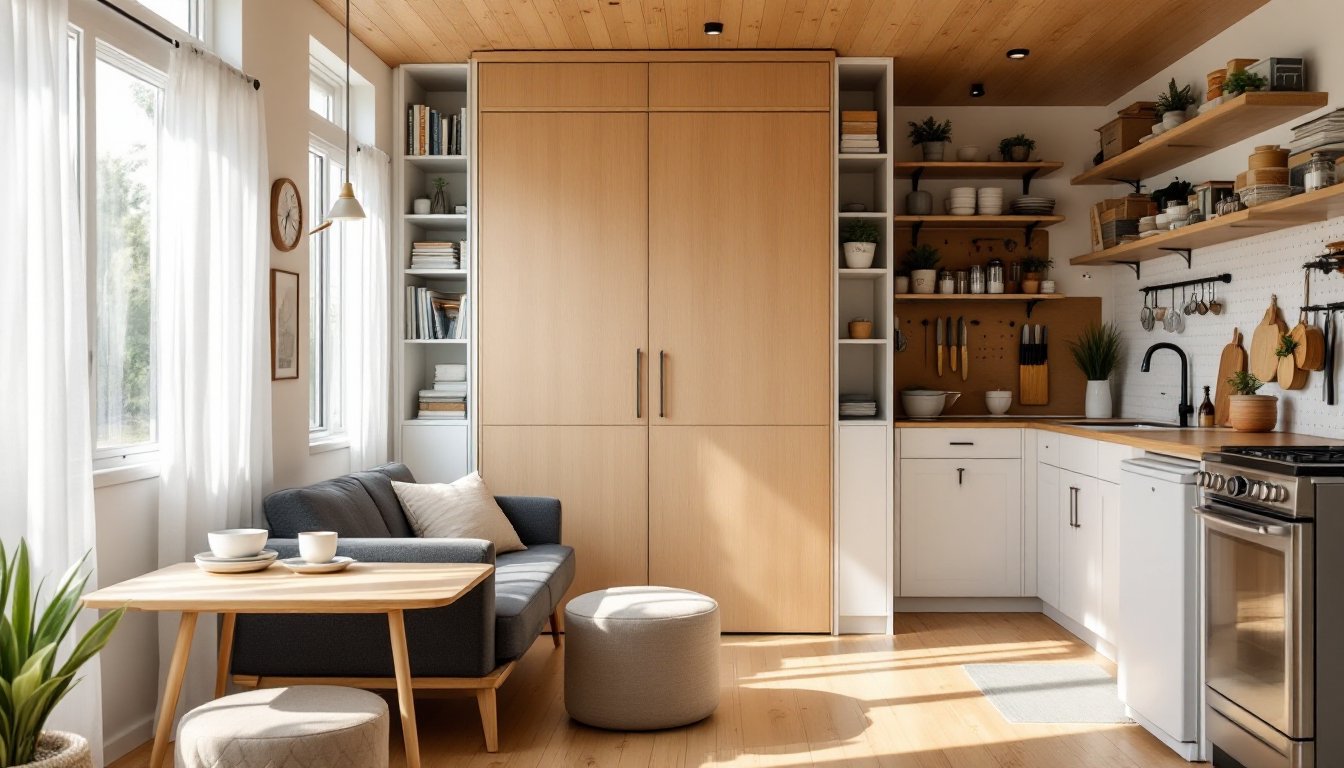
Every piece of furniture in a tiny home should earn its footprint. Murphy beds (wall beds) fold vertically into cabinetry when not in use, freeing 25–35 square feet of floor space during waking hours. Look for models with integrated shelving or fold-down desks on the bed face. Most Murphy bed frames require mounting to wall studs with lag bolts rated for at least 200 pounds dynamic load: drywall anchors alone won’t hold.
Convertible sofas and futons work as seating by day and sleeping surfaces by night. Skip the bargain-bin futons, look for frames with hardwood construction (birch or oak) and at least 8-inch innerspring or high-density foam mattresses. A quality frame adds $400–$700 to the budget but lasts a decade under daily conversion.
Drop-leaf and expandable tables adjust from single-person breakfast nook to four-seat dining in seconds. Wall-mounted drop-leaf tables (also called floating tables) attach directly to studs and fold flat when not needed. Freestanding expandable tables with butterfly leaves or slide-out extensions offer flexibility without permanent wall attachment. Verify the leaf-locking mechanism is metal, not plastic, cheap hardware fails within months of repeated use.
Ottoman storage benches serve triple duty as seating, footrests, and enclosed storage for linens, off-season clothing, or pantry overflow. Choose models with removable tops for easy access and cleanout. Many small space living ideas emphasize furniture that collapses or nests, but durability matters more than novelty when a single piece sees daily use in multiple roles.
Smart Storage Solutions for Clutter-Free Tiny Living
Storage in a tiny home isn’t optional, it’s structural. Without dedicated zones for every category of belongings, clutter colonizes counters and floor space within days.
Vertical Storage and Wall-Mounted Organizers
Floor-to-ceiling shelving reclaims the upper third of wall space that standard furniture ignores. Use adjustable track shelving (standards and brackets) rather than fixed shelves: you can reconfigure heights as storage needs change. Mount standards into wall studs spaced 16 or 24 inches on center. For loads exceeding 50 pounds per linear foot, double up brackets or use heavy-duty standards rated for garage use.
Pegboard and slat-wall systems turn vertical surfaces into tool storage, pantry organizers, or closet systems. ¼-inch tempered hardboard pegboard is the standard for light-duty storage (hand tools, kitchen utensils): metal pegboard handles heavier items like cast-iron cookware or power tools. Slat-wall panels (often used in retail fixtures) accept a wider variety of hooks and bins but cost $3–$5 per square foot installed versus $1–$2 for pegboard.
Magnetic knife strips, spice racks, and utensil bars mount with screws or heavy-duty adhesive strips rated for the item weight. Adhesive-mount organizers work on smooth, non-porous surfaces (tile, glass, metal): they fail on textured drywall or porous wood unless the surface is primed first.
Hidden Storage and Built-In Compartments
Stair storage is standard in lofted tiny homes. Each tread can conceal a pull-out drawer or lift-up compartment. Retrofitting stair storage into an existing staircase requires cutting into stringers (the structural side supports), which may compromise the stair’s load rating if not reinforced. New-build stairs designed for storage use box stringers with integrated drawer slides.
Under-floor storage works where ceiling height allows raising the floor deck by 8–12 inches. Frame a new subfloor with 2×6 or 2×8 joists on 16-inch centers, creating accessible bays between joists. Cover with ¾-inch plywood or OSB sheathing. Install hinged or removable access panels secured with flush pulls. This approach is common in RVs and converted vans but adds weight, calculate whether your trailer or foundation can handle the additional load.
Hollow furniture bases hide storage in plain sight. Platform beds with lift-up mattress decks reveal cavernous compartments underneath, enough for seasonal wardrobes or bulky items like camping gear. Use gas struts (like those on hatchback car trunks) to assist lifting: a queen mattress and platform deck weigh 80–100 pounds, and manual lifting gets old fast.
Compact Kitchen Must-Haves for Small Space Cooking
Tiny home kitchens average 25–40 square feet of total floor and counter space. Appliance choices make or break functionality.
Apartment-size ranges (20–24 inches wide) fit where full 30-inch models won’t. Most use standard 120V/240V electric hookups identical to full-size ranges: confirm your electrical panel has a dedicated 40-amp or 50-amp circuit before purchase. Gas models require ½-inch black iron or CSST flexible gas line run by a licensed plumber or gas fitter, DIY gas work violates code in most jurisdictions and voids homeowner’s insurance.
Combination microwave-convection ovens replace both a microwave and a second oven in one unit. These typically mount over-the-range (OTR) like a standard microwave but include convection heating elements for baking and roasting. Verify the unit includes an integrated vent hood rated for at least 300 CFM: tiny homes generate cooking moisture and grease just like full-size kitchens, and poor ventilation leads to mold and odor buildup.
Two-burner induction cooktops use 1,800 watts per burner and run on standard 120V circuits (no 240V required). Induction heats faster than electric coil or gas and wastes less energy, but requires ferrous cookware (cast iron, stainless steel with magnetic bases). Aluminum and copper pans won’t work unless they have an induction-compatible bottom layer.
Compact refrigerators in the 7–10 cubic-foot range offer a top freezer and enough fridge space for a week’s groceries for two people. Models with Energy Star certification use 200–300 kWh annually versus 400+ kWh for non-certified units, a meaningful difference when living off-grid or paying for every watt. Many home organization tips recommend door-mounted racks and shelf risers to maximize internal fridge volume.
Undermount or single-bowl sinks sized 18–25 inches wide fit compact counters and still handle full-size dinner plates. Choose 16- or 18-gauge stainless steel for durability: 20-22 gauge dents and flexes under use. Pair with a pull-down or commercial-style faucet that offers a spray function, tiny sinks need extra rinsing power to manage dishes efficiently.
Space-Saving Bathroom Essentials and Fixtures
Bathrooms in tiny homes often measure 3×6 feet or smaller. Fixture selection and layout determine whether the space feels cramped or merely compact.
Corner sinks or wall-hung sinks without vanities reclaim floor space and make the room feel larger. Wall-hung sinks require in-wall blocking (horizontal 2×6 or 2×8 lumber between studs) to support the fixture weight plus user load. If you’re retrofitting an existing wall, open the drywall, add blocking between studs, then patch and paint. Without proper blocking, wall-hung sinks sag or pull free over time.
Compact toilets with round bowls and short-projection designs fit where standard elongated bowls won’t. Measure from the wall (not the baseboard) to the closet flange (the drain collar bolted to the floor): this dimension is the toilet’s rough-in, typically 10, 12, or 14 inches. Most tiny home toilets use a 12-inch rough-in. Composting or incinerating toilets eliminate the need for a black-water holding tank or septic connection, but they require venting to the exterior and regular maintenance.
Shower stalls in 30×30-inch or 32×32-inch footprints are the smallest code-compliant sizes for residential use. The International Residential Code (IRC) requires a minimum 900 square inches of shower floor area and a 30-inch-diameter circle clearance inside the stall. Anything smaller technically violates residential code, though many tiny home builders use RV-style showers (as small as 24×24 inches) by classifying the structure as a recreational vehicle rather than a permanent dwelling.
Sliding or bi-fold shower doors consume less clearance than swinging doors. Frameless glass doors look sleek but cost $400–$800 installed: framed acrylic or tempered glass models run $150–$300 and work just as well. Many budget home renovation stories highlight DIY shower door installation as a manageable weekend project with basic tools (drill, level, silicone caulk).
Recessed medicine cabinets mount between wall studs, offering storage without protruding into the room. Standard cabinets fit 14.5-inch stud bays (the space between studs on 16-inch centers). Mark stud locations with a stud finder, cut the drywall opening, and secure the cabinet to the studs with screws. Avoid cutting into studs themselves unless you add headers and cripple studs to carry the load, removing too much stud material weakens the wall’s structural capacity.
Combination washer-dryer units or ventless washer-dryer combos fit in closets or under counters and eliminate the need for a separate laundry area. Ventless units don’t require exterior dryer vent ducting (which can be difficult to route in tiny homes), but they take 2–3 hours to complete a combined wash-dry cycle versus 90 minutes for separate machines. Load capacity is typically 2–2.5 cubic feet, enough for a week’s laundry for one or two people.
Conclusion
Outfitting a tiny home isn’t about buying miniature versions of everything, it’s about choosing items that multitask, mount vertically, or tuck away when idle. Prioritize structural solutions (built-in storage, wall-mounted furniture, compact fixtures) over decorative upgrades. Every purchase should answer a clear functional need, and every installation should respect load limits, code requirements, and long-term durability. Done right, a well-equipped tiny home delivers full-size comfort in a fraction of the footprint.